




Official Project Document
REBELLION
Building a Community-Powered Digital Economy
Whitepaper — Version 1.0 Draft | October 2026
- Project: Rebellion
- Proposed token name: REBELLION
- Proposed ticker: REB — subject to availability
- Core products: Mobile mining, token wallet, peer-to-peer trading, and goods-and-services marketplace.
- Vision: To build a digital economy where participation creates opportunity and digital tokens can be used for practical transactions.
This is a concept-stage draft. Network selection, token supply, distribution percentages, legal structure, and technical specifications must be finalized before publication as the project's definitive whitepaper.
1. Abstract
Rebellion is a proposed community-driven cryptocurrency ecosystem designed to connect digital participation with practical economic activity.
The project aims to introduce users to digital assets through a mobile mining experience, enable eligible users to hold and transfer REBELLION tokens, and create a marketplace where users and merchants can exchange goods and services using the token.
Many app-based mining projects focus primarily on accumulating in-app balances or generating excitement about a possible exchange listing. Rebellion aims to take a broader approach by building toward a functional ecosystem with clearly defined token rules, transparent reward accounting, reliable transactions, and merchant utility.
The long-term objective is to develop a sustainable relationship between users, token holders, merchants, and ecosystem partners.
Rebellion does not promise profits, guaranteed token appreciation, or guaranteed exchange listings. Its success will depend on execution, adoption, token economics, legal compliance, and the value that its products deliver.
2. Vision and Mission
Vision
To become a trusted digital economy where people can earn, exchange, and spend digital tokens through a single connected ecosystem.
Mission
To make digital asset participation more accessible by combining mobile mining, peer-to-peer exchange, and practical commerce in one platform.
Core Values
- Accessibility: Make the platform understandable and usable for newcomers.
- Transparency: Explain mining rules, token supply, distribution, and withdrawals.
- Utility: Build real reasons to use REB beyond holding or trading it.
- Security: Protect accounts, transactions, and user information.
- Community: Encourage participation while preventing manipulation and abuse.
- Sustainability: Align rewards with realistic economic activity and available resources.
3. The Problem Rebellion Aims to Solve
Rebellion is designed around five challenges in the app-based crypto economy.
- Limited token utility. Some platforms let users accumulate balances without providing a clear path to transfer or spend them.
- Disconnected services. Mining, wallets, trading, and online shopping are often handled by separate products.
- Unclear reward systems. Users may not understand how rewards are calculated, whether balances are transferable, or what conditions apply to withdrawals.
- Merchant adoption barriers. Businesses need straightforward tools to list products, accept payments, and manage orders.
- Trust and security concerns. Users need protection against impersonation, fraudulent transactions, misleading reward claims, and unsafe wallet interactions.
4. The Rebellion Ecosystem
- Rebellion Mining App: User participation and reward tracking.
- REB Wallet: Balances and transfers.
- P2P Exchange: User-to-user trading.
- Rebellion Marketplace: Goods, services, merchants, and REB payments.
4.1 Mobile Mining
The Rebellion app will allow eligible users to participate in scheduled mining sessions and earn rewards according to published rules. Proposed features include:
- Daily mining sessions.
- A personal balance and reward history.
- Transparent mining-rate and eligibility rules.
- Referral incentives subject to fraud prevention.
- Account verification where necessary.
- Clear distinction between pending rewards and transferable tokens.
- A withdrawal interface once on-chain or otherwise supported transfers are available.
Important technical distinction: If users tap a button and receive virtual balances, this is not necessarily proof-of-work blockchain mining. Rebellion should describe its mechanism accurately as app-based reward accrual unless actual blockchain mining is implemented.
4.2 REB Wallet and Withdrawals
The wallet is intended to give users a way to view their eligible REB balances and, when supported, transfer tokens.
- Balance and transaction history.
- Deposit and withdrawal records, if supported by the chosen network.
- Address validation and transaction-status tracking.
- Account security controls.
- Clear network fees and applicable limits.
4.3 Peer-to-Peer Trading
Rebellion plans to develop a system through which users can buy and sell REB with other participants.
- User listings and quoted prices.
- Order creation and completion tracking.
- Dispute resolution and fraud reporting.
- Reputation or transaction-history features.
- Escrow or other safeguards, if legally permitted and technically supported.
4.4 Rebellion Marketplace
The marketplace is intended to be one of the project's principal sources of real-world token utility. Participating merchants may offer products such as electronics, clothing, digital products, subscriptions, and eligible services.
- Merchant registration and verification.
- Product listings, descriptions, and pricing.
- REB-denominated checkout and order tracking.
- Refund and cancellation procedures, and customer reviews.
5. Token Design and Tokenomics
| Parameter | Proposed Approach |
|---|---|
| Token name | REBELLION |
| Ticker | REB, subject to availability |
| Token type | Fungible digital token |
| Blockchain | To be selected after technical and cost evaluation |
| Maximum supply | To be finalized before launch |
| Mining rewards | Distributed under published emission rules |
| Transferability | Enabled only when technically and legally ready |
5.2 Illustrative Allocation Model
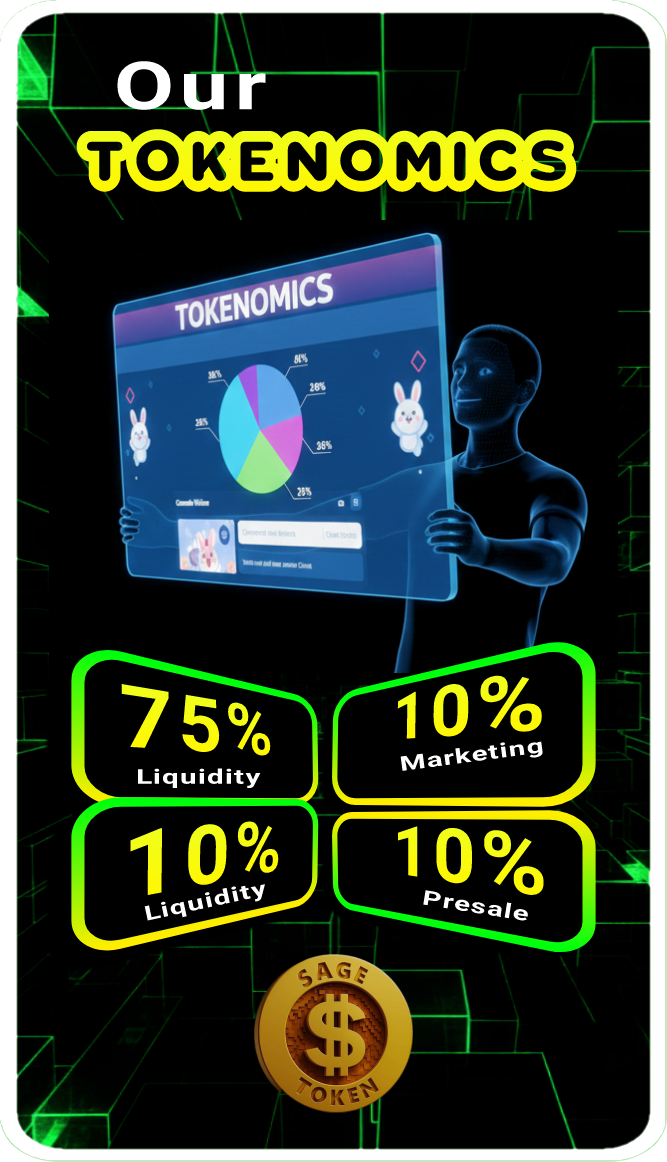
- Community mining and user rewards: 45%
- Ecosystem and merchant growth: 20%
- Treasury and long-term development: 15%
- Team and contributors: 10%
- Liquidity and market operations: 10%
This allocation is illustrative and must be finalized before token deployment. Vesting, treasury controls, liquidity management, and distribution schedules should be documented transparently.
6. Technology and Infrastructure
Rebellion should use the simplest secure technology that supports its actual product requirements.
- Stage 1 — Build the application. Develop the mobile app, backend reward ledger, user accounts, and administrative controls.
- Stage 2 — Select a blockchain. Compare established networks based on transaction costs, wallet compatibility, and security.
- Stage 3 — Deploy the token. Implement the token using an established standard.
- Stage 4 — Integrate wallets. Test transfers, fees, failed transactions, and recovery procedures.
- Stage 5 — Introduce P2P trading and marketplace. Build order tracking, settlement, and fraud controls.
7. Security and User Protection
Security must be a core product requirement from the beginning, not a feature added after launch.
- Independent smart-contract security reviews.
- Secure account authentication and protection against account takeovers.
- Multi-signature controls for sensitive treasury operations.
- Monitoring for unusual transactions, referral abuse, and automated account farming.
8. Governance and Transparency
Rebellion should begin with a clearly documented operating structure and introduce community governance only when the project is ready to support it responsibly.
Governance processes should establish clear responsibilities, transparent project updates, documented treasury policies, and appropriate ways for community members to provide feedback.
9. Business Model and Revenue Sustainability
Potential revenue sources include marketplace commissions, optional merchant premium tools, paid merchant placements, and integration fees.
The long-term business model should be based on sustainable services and genuine user demand rather than relying solely on token speculation or continued recruitment of new participants.
10. Risk Factors and Limitations
Rebellion remains a proposed ecosystem. Its implementation may involve technical, commercial, regulatory, and adoption risks.
- Token values may fluctuate, and liquidity is not guaranteed.
- Blockchain networks and smart contracts may experience technical vulnerabilities or service disruptions.
- Mining rewards and withdrawals will depend on the final system design and published rules.
- Marketplace adoption will depend on participating merchants, customer demand, and reliable settlement.
- Applicable laws and compliance requirements must be assessed for each relevant market.
11. Legal and Regulatory Considerations
Before launch, Rebellion should obtain appropriate legal advice concerning digital assets, consumer protection, privacy, taxation, payment services, and any licensing requirements that apply to its proposed activities.
The project should publish accurate information about token functionality, risks, eligibility requirements, fees, and withdrawal conditions. No feature should be presented as available until it has actually been implemented and verified.
12. Implementation and Success Measures
Progress should be measured using meaningful product and operational indicators rather than community size alone.
- Application reliability and account security.
- Transparent and accurately recorded reward balances.
- Successful transactions and clearly reported failures.
- Active users who use real platform features.
- Verified merchants and completed marketplace orders.
- Support response times and resolved user complaints.
13. Conclusion
Rebellion's long-term ambition is to connect mobile participation with a functional digital economy. Its success will not be determined solely by how many people mine tokens or how quickly a token becomes tradable. It will depend on whether users can interact with the platform safely, whether the token's rules are transparent, whether merchants find value in accepting it, and whether the project can sustain its operations.
Rebellion's defining objective is to move from earning tokens to using them.
Part 3: The Launch Strategy
Pending decisions for finalization:
- Blockchain choice: BNB Smart Chain (BEP-20), Ethereum (ERC-20), Polygon, or TON.
- Maximum supply: 100M, 1B, 10B, or a custom model.
- Mining method: Tap-to-mine, proof-of-work, or hybrid.
- Withdrawal structure: Direct on-chain transfers versus internal transfers first.
- Trading rollout: P2P marketplace versus open trading.
Publication note: This document describes a proposed project and contains draft tokenomics and future plans. It is not a guarantee of launch, profitability, exchange listing, or token value.